

Key Takeaways
-
Poor documentation is one of the leading sources of liability in jail healthcare
-
Fragmented and delayed records increase legal and operational risk
-
Standardized documentation and digital systems improve defensibility and care continuity
What is correctional healthcare documentation?
Correctional healthcare documentation refers to the medical records created during the evaluation, treatment and monitoring of individuals in custody. These records include intake screenings, medication administration logs, clinical notes and mental health documentation.
In jail settings, the medical record serves as both a clinical tool and a legal document.
Why is documentation critical in jail healthcare?
Documentation is critical because it determines how care is interpreted after the fact. In correctional healthcare:
-
Patients cannot seek outside care independently
-
Multiple staff interact with the same patient across shifts
-
Legal scrutiny is common
As a result, the medical record becomes the primary source of truth during investigations, audits and litigation.
What are the biggest documentation risks in jails?
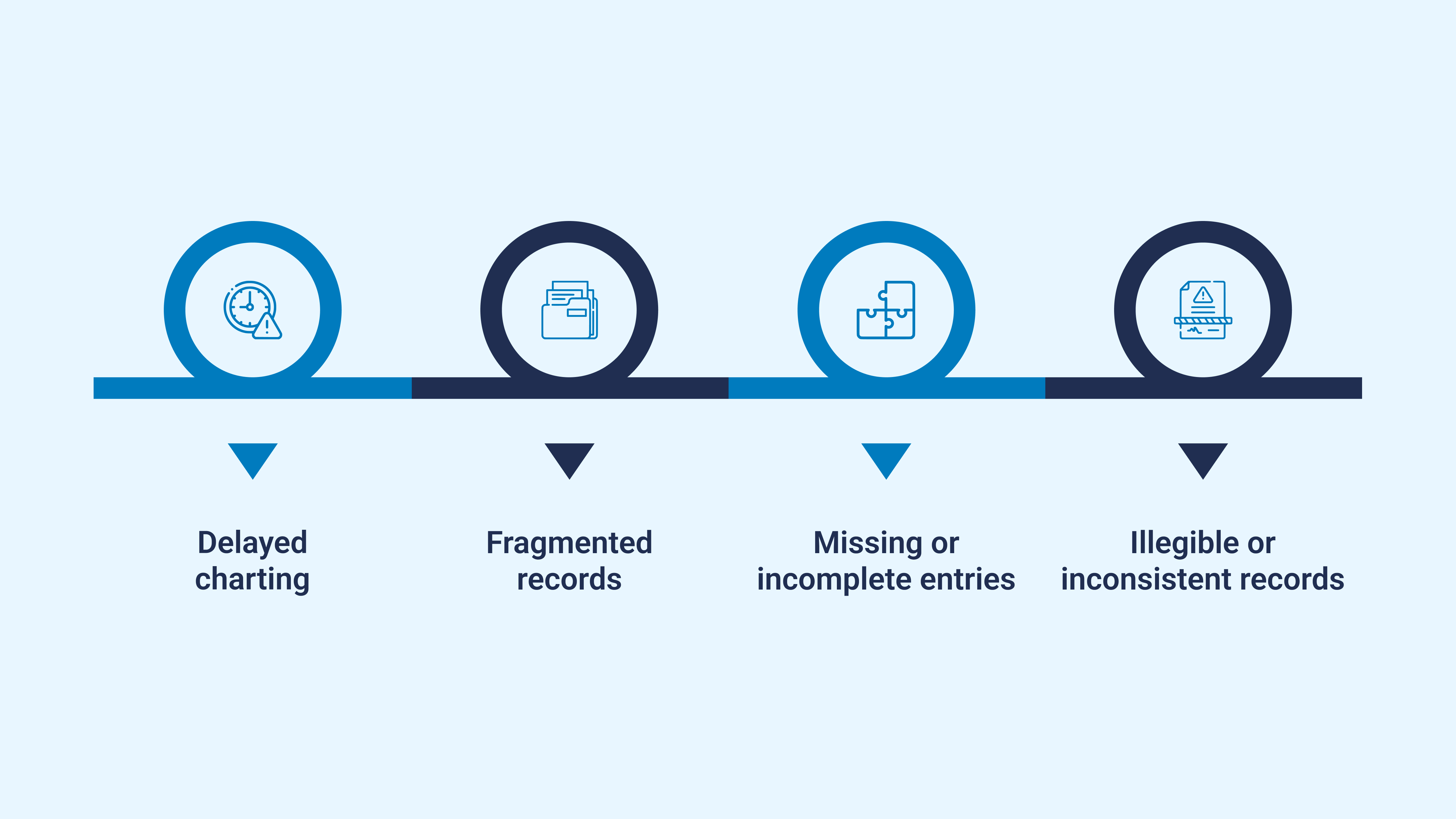
The most common documentation risks in correctional healthcare include:
1. Delayed charting
Documentation completed hours after care increases the risk of missing or inaccurate information.
2. Fragmented records
Medical, mental health and medication records may exist in separate systems or paper files.
3. Missing or incomplete entries
Failure to document symptoms, treatment decisions or follow-up plans creates gaps in the clinical narrative.
4. Illegible or inconsistent records
Handwritten documentation can introduce ambiguity and misinterpretation.
How documentation failures create liability
In correctional healthcare litigation, the medical record often determines the outcome. When documentation clearly shows:
-
assessments were completed
-
protocols were followed
-
patients were monitored
-
facilities are better positioned to defend care decisions.
When documentation is incomplete, even appropriate care may appear inadequate.
How documentation affects daily operations
Documentation is not just a legal issue—it directly impacts operations. Incomplete records can lead to:
-
missed symptoms during shift changes
-
duplicated work across staff
-
delays in treatment decisions
In a 24/7 jail environment, documentation is the primary communication tool between care teams.
How to improve documentation in correctional healthcare
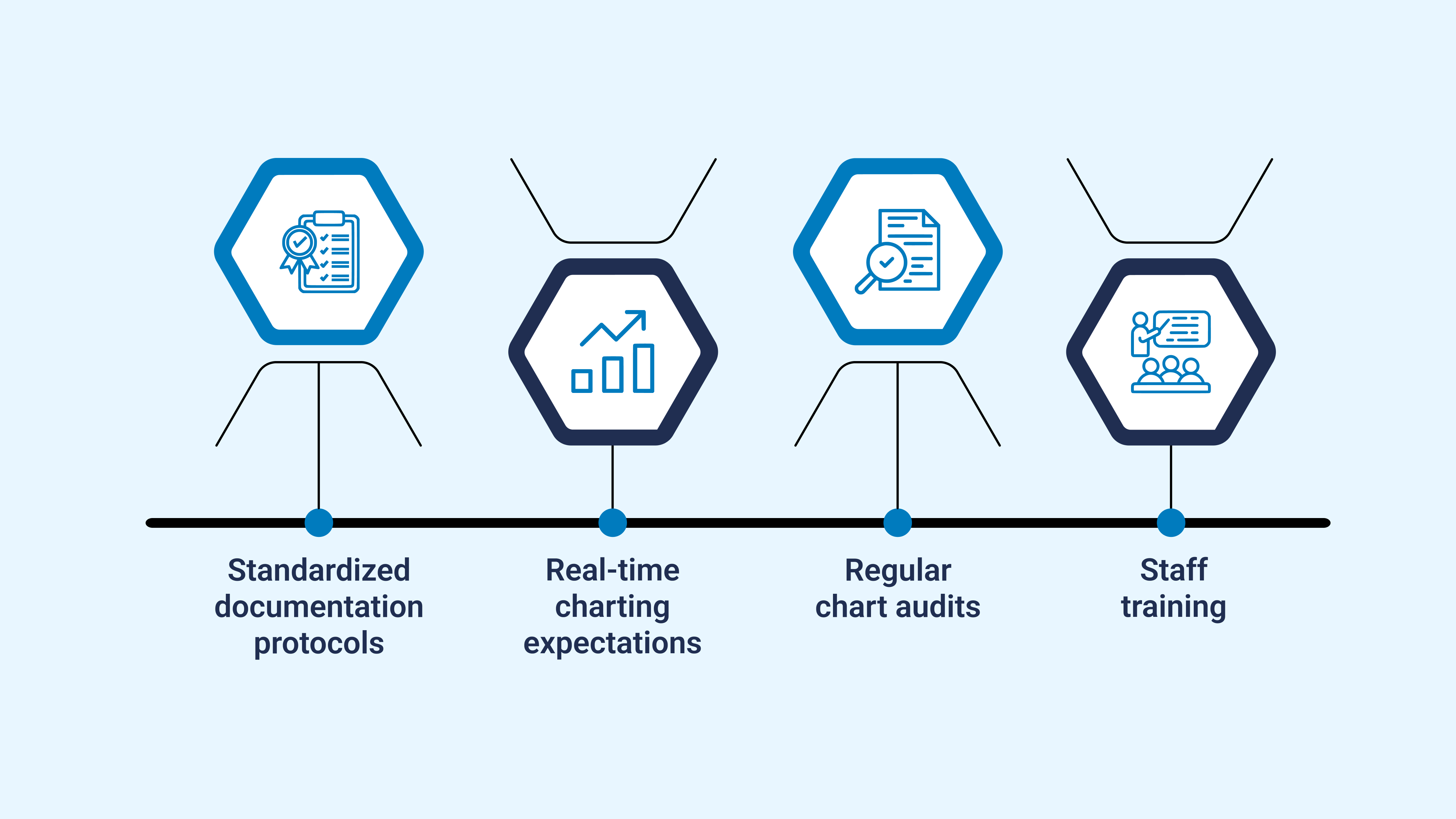
Correctional facilities can reduce risk by implementing:
Standardized documentation protocols
Define required fields for every patient encounter
Align with NCCHC, ACA, AJA, and other accrediting standards
Real-time charting expectations
Encourage documentation at the point of care
Regular chart audits
Identify gaps in completeness and timeliness
Staff training
Emphasize documentation as a clinical and legal responsibility
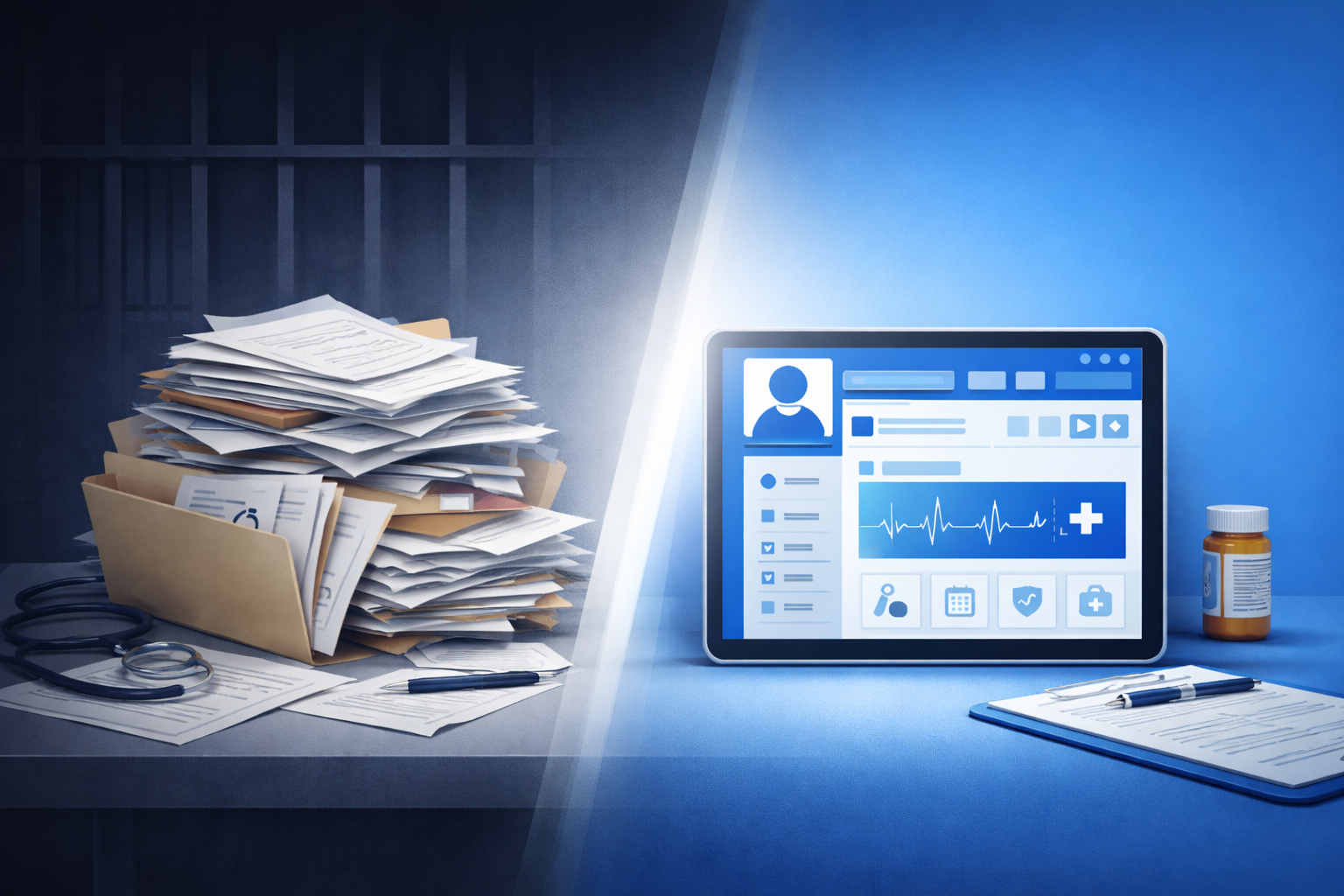
What role do electronic health records (EHRs) play?
Electronic health records improve documentation by:
-
standardizing data entry
-
time-stamping records
-
reducing lost or incomplete charts
While EHRs do not eliminate risk, they significantly improve documentation consistency.
Conclusion
Documentation failures represent one of the most preventable risks in correctional healthcare. Facilities that prioritize complete, timely and standardized documentation can improve both patient outcomes and legal defensibility.
If your facility is exploring ways to reduce administrative burden, improve care coordination, and modernize healthcare operations, CorrecTek offers EHR solutions built specifically for correctional healthcare environments. Trusted by over 120 organizations across 30 states and Puerto Rico, CorrecTek helps facilities streamline workflows, strengthen compliance, and support better care delivery.
Discover the CorrecTek Difference.

.png)