

Key Takeaways
-
Medicaid waivers are expanding healthcare access before release
-
Reentry is a high-risk period for justice-involved individuals
-
Jails are playing a larger role in care coordination
What is a Medicaid reentry waiver?
A Medicaid reentry waiver is a Section 1115 demonstration that allows states to provide limited healthcare services to incarcerated individuals prior to release. These waivers aim to improve continuity of care during the transition from incarceration to the community.
Why is reentry a critical healthcare moment?
Individuals leaving jail face elevated risks, including:
-
gaps in medication access
-
untreated mental health conditions
-
increased risk of overdose
The first weeks after release are particularly high-risk.
What services do Medicaid reentry waivers cover?
Depending on the state, services may include:
-
care coordination
-
behavioral health treatment
-
medication-assisted treatment (MAT)
-
prescription medications prior to release
How do these waivers impact jails?
Jails are becoming more involved in:
-
discharge planning
-
coordinating with community providers
-
assisting with Medicaid enrollment
-
scheduling follow-up care
This expands the role of correctional healthcare beyond incarceration.
What challenges do jails face in implementation?
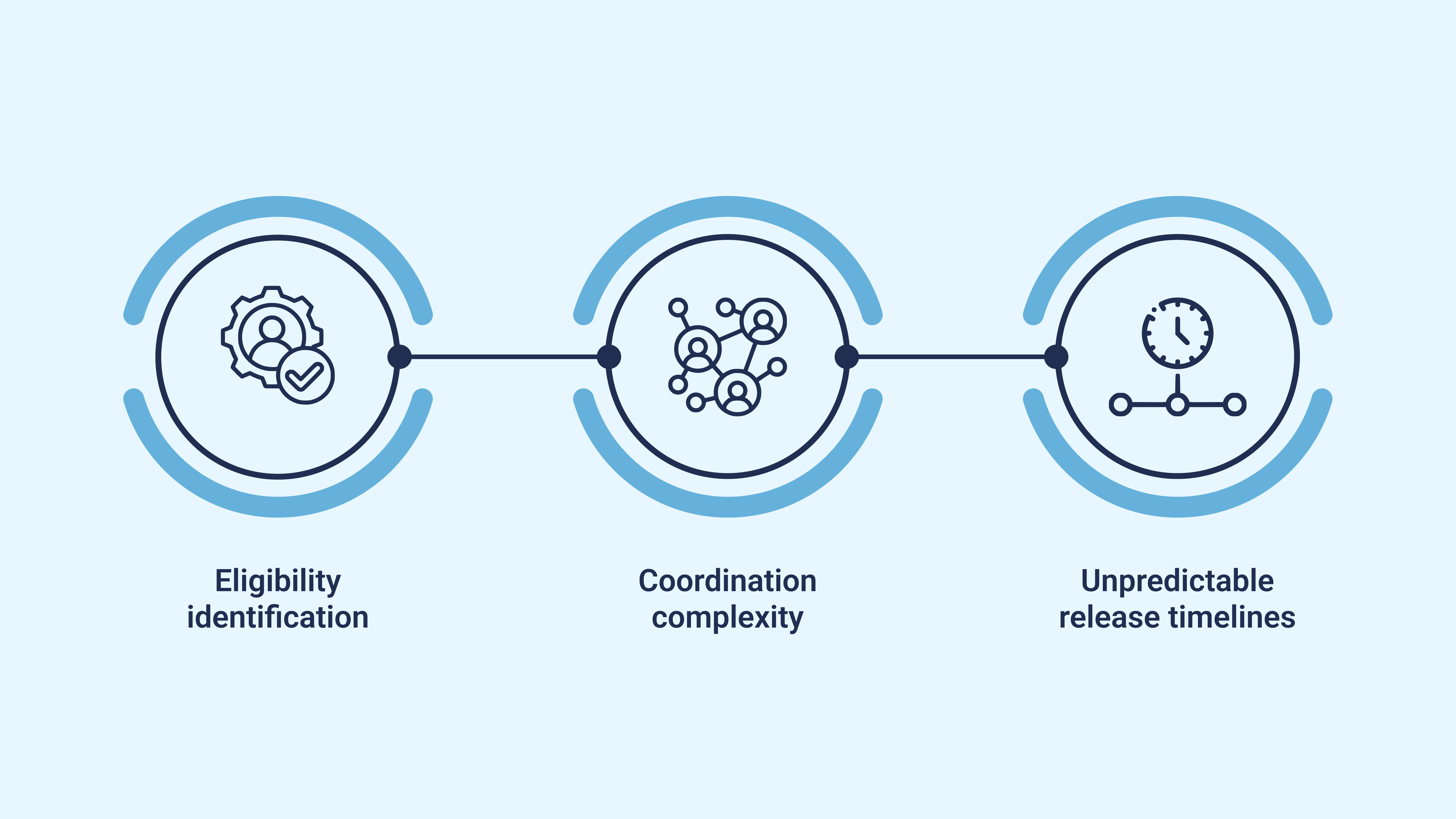
Eligibility identification
Determining who qualifies for services
Coordination complexity
Working with external providers and agencies
Unpredictable release timelines
Changes in release dates can disrupt planning
How Medicaid waivers improve outcomes
Reentry programs aim to:
-
reduce emergency department visits
-
improve treatment adherence
-
support behavioral health stabilization
-
lower overdose risk
What this means for the future of jail healthcare
Medicaid reentry waivers signal a shift toward integrated care models that connect correctional healthcare with community systems.
Jails are increasingly part of a broader healthcare continuum rather than isolated care environments.
Conclusion
Medicaid reentry waivers are reshaping how correctional healthcare supports individuals beyond incarceration. By enabling care coordination, medication access, and behavioral health support before release, these programs help bridge critical gaps during one of the most vulnerable periods in a patient’s journey.
As jails take on a more active role in discharge planning and continuity of care, having the right systems in place becomes essential. Solutions that streamline coordination, support compliance, and connect correctional facilities with community providers can make this transition more effective and sustainable.
If your facility is exploring ways to reduce administrative burden, improve care coordination, and modernize healthcare operations, CorrecTek offers EHR solutions built specifically for correctional healthcare environments. Trusted by over 120 organizations across 30 states and Puerto Rico, CorrecTek helps facilities streamline workflows, strengthen compliance, and support better care delivery.
Discover the CorrecTek Difference.



.png)