

Key Takeaways
-
Paper-based healthcare systems create inefficiencies in jail operations
-
Fragmented records slow clinical decision-making
-
Digital systems improve access, coordination and reporting
What is paper-based healthcare in jails?
Paper-based healthcare refers to the use of physical charts, forms and logs to document medical care in correctional facilities.
These systems often include:
-
intake forms
-
medication administration records
-
clinical notes
-
mental health documentation
Why are paper systems still used in jails?
Many jails continue using paper records due to:
-
limited budgets
-
minimal technology infrastructure
-
familiarity with existing workflows
However, the limitations of paper systems are becoming more pronounced as healthcare needs grow more complex.
What are the operational challenges of paper-based systems?
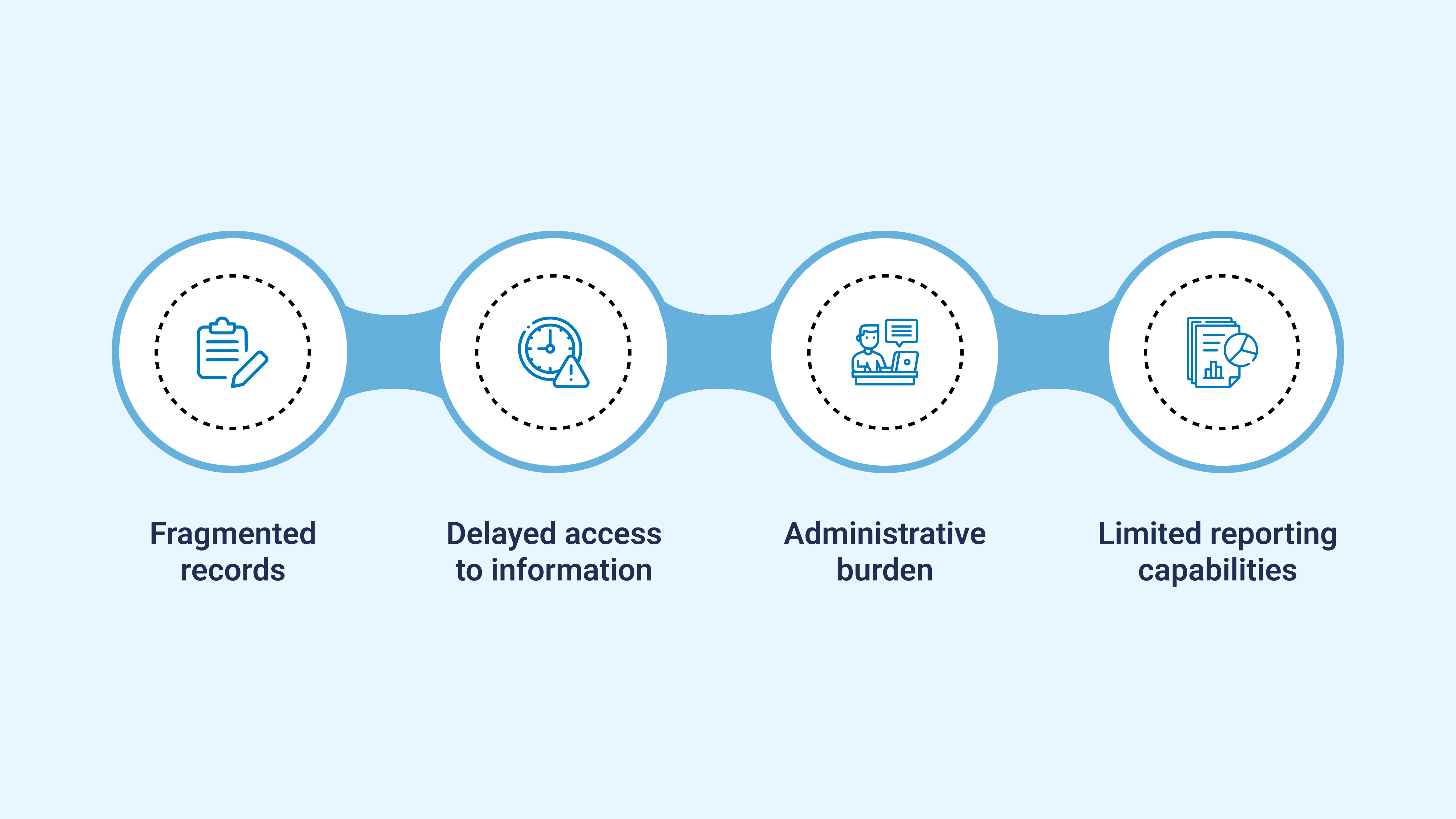
Fragmented records
Information is stored across multiple files and locations.
Delayed access to information
Charts must be physically retrieved, transported or located.
Administrative burden
Staff spend time filing, copying and managing records.
Limited reporting capabilities
Extracting data for audits or compliance is time-consuming.
How paper records impact patient care
Paper systems can delay care by:
-
slowing access to patient histories
-
limiting visibility into prior treatment
-
increasing the risk of missing information
This is especially challenging for chronic care and behavioral health management.
How paper systems affect continuity of care
Continuity of care is difficult when:
-
records are archived or difficult to retrieve
-
patients cycle through facilities
-
historical data is incomplete
Providers may need to recreate medical histories instead of building on existing information.
What are the benefits of electronic health records in jails?
Electronic health records (EHRs) address many of these challenges by: • centralizing patient information
-
enabling faster access to records
-
supporting reporting and compliance
-
reducing administrative workload
EHR systems also improve coordination between medical and mental health providers.
How jails can transition away from paper systems
A phased approach is often most effective:
Step 1: Digitize key workflows
Start with intake or medication records.
Step 2: Standardize data collection
Ensure consistent documentation formats.
Step 3: Expand system adoption
Gradually transition additional processes to digital platforms.
Conclusion
Paper-based healthcare systems can limit efficiency, increase workload and create barriers to effective care. As correctional healthcare becomes more complex, access to accurate and timely information is essential for operational success.
If your facility is exploring ways to reduce administrative burden, improve care coordination, and modernize healthcare operations, CorrecTek offers EHR solutions built specifically for correctional healthcare environments. Trusted by over 120 organizations across 30 states and Puerto Rico, CorrecTek helps facilities streamline workflows, strengthen compliance, and support better care delivery.
Discover the CorrecTek Difference.

.png)